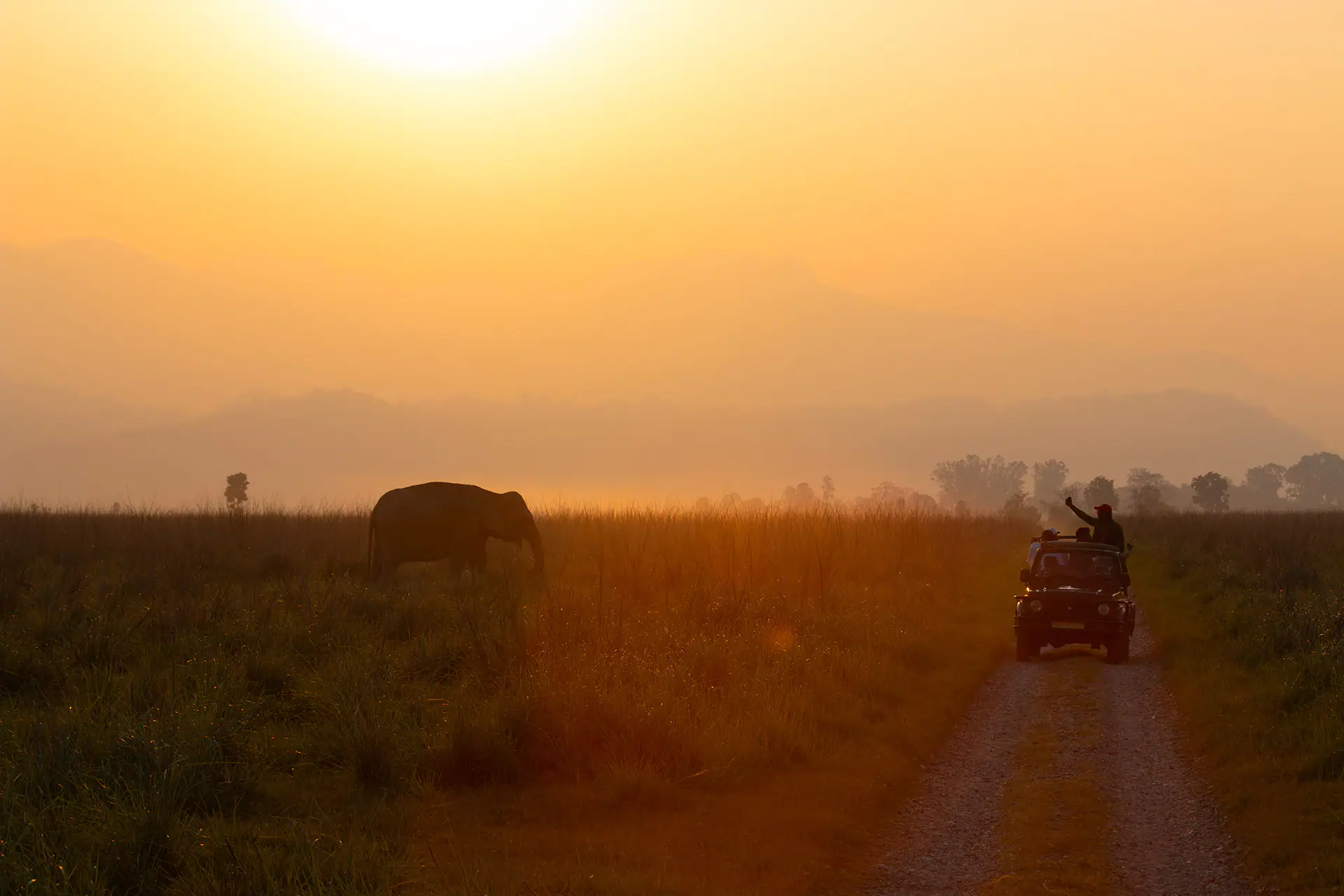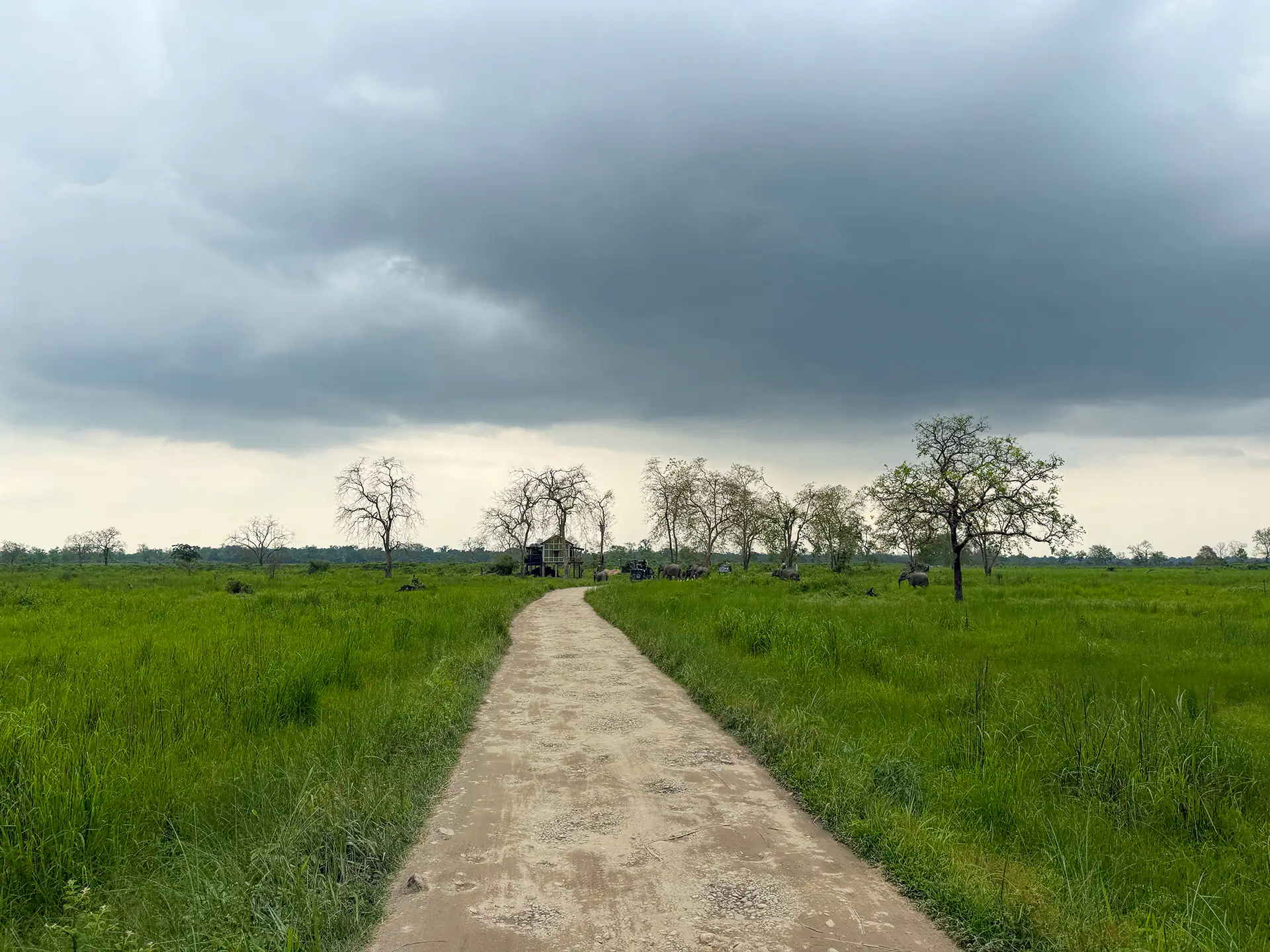
The Bijrani safari zone reopens on October 15, 2026 — and if a Corbett journey is on your mind this season, the opening week is the moment to target. Fresh grass after the monsoon, cats on the move, and permits that vanish within hours of release: Bijrani in mid-October is Corbett at its most electric. This guide covers everything you need to plan it — opening dates, safari timings, jeep safari costs, how to book, how Bijrani compares with Dhikala, the new rules for the season, and the remarkable conservation story unfolding behind the scenes.
Bijrani Safari Zone: Opening Dates for 2026–27
The Bijrani safari zone opens for the 2026–27 season on October 15, 2026 and runs through June 30, 2027, as listed on the official Corbett Tiger Reserve website. Bookings open 45 days in advance for Indian visitors and 90 days ahead for foreign nationals, on the official portal corbettonline.uk.gov.in. Permits are non-transferable and non-refundable — and for the opening week they are typically claimed within hours of release. If Bijrani safari zone is on your list, set a reminder for the morning your booking window opens. Forest rest house night stays run on a separate published 45-day rolling release schedule — worth knowing if you plan to sleep inside the reserve rather than day-visit.
Safari Timings at Bijrani
Bijrani safari zone run in two shifts a day, with timings shifting by season. Treat these as approximate — the forest department adjusts them with daylight:
- Winter (November–February): morning roughly 6:30–9:30 AM; afternoon roughly 1:30–5:30 PM.
- Summer (March–June): morning roughly 5:30–9:30 AM; afternoon roughly 3:00–6:30 PM.
The morning drive is the classic choice. Predators are most active in the first light, and Bijrani’s open grasslands — the chaurs — hold their mist until the sun climbs. If you only do one safari, make it this one.
How Much Does a Bijrani Jeep Safari Cost?
A private jeep carries up to six visitors plus driver and guide, and the price is charged per jeep regardless of how many seats you fill — so a full vehicle splits the cost six ways. As listed on the reserve’s online pricing (corbettgov.org/pricing), a Bijrani safari zone day safari breaks down as permit ₹3,380 + vehicle charge ₹2,700 + guide charge ₹1,000 — ₹7,080 per jeep for Indian visitors. For foreign nationals the permit is ₹6,680, bringing the per-jeep total to ₹10,380. One permit covers up to six individuals, including two children under 12. Indian senior citizens get ₹250 off per person and students aged 12–18 get ₹375 off, with valid ID; OCI and SAARC nationals pay Indian rates — but if even one foreign national is on the permit, foreign rates apply to everyone. For the full national picture of what a tiger safari costs across India’s parks, read our tiger safari cost guide for 2026.

Where to Stay: Ramnagar and the Amdanda Gate
Bijrani safari zone is entered via the Amdanda gate, barely a couple of kilometres from Ramnagar town — the closest of Corbett’s gates to its base town, which makes Bijrani the easiest genuine Corbett safari to do as a short trip. Most travellers base themselves in Ramnagar or at one of the lodges along the Kosi river belt, an easy drive from the gate. For an opening-week safari, stay within fifteen minutes of Amdanda: the morning reporting time is unforgiving, and the queue at the gate rewards the early.
Bijrani vs Dhikala: Which Corbett Zone Should You Choose?
This is the question every Corbett traveller asks, and the honest answer depends on when you travel and how you like to safari.
Bijrani: the accessible one
Sal forest broken by wide grasslands, around 30 jeeps per shift, and a reputation as Corbett’s second-best tiger zone after Dhikala. The decisive advantage: anyone can book a day-visit jeep safari here — no forest rest house stay required. It opens October 15, first of the big zones.
Dhikala: the legendary one
The largest zone, the great Dhikala chaur grassland, the Ramganga river, and the highest tiger-sighting reputation in the reserve. But there is a catch: Dhikala offers no day-visit jeep safaris to casual visitors. Jeeps inside Dhikala are reserved for guests holding a Forest Rest House night-stay permit. Day visitors experience Dhikala by canter — 16-seater buses at ₹1,500 + 18% GST per seat for Indian visitors (₹3,000 + GST for foreign nationals), boarding at Ramnagar and Dhangarhi. And Dhikala opens later, on November 15.
The opening-week verdict: Bijrani is your play for October and early November — bookable by anyone, right now. If you are travelling deeper into the season and can secure a Dhikala forest rest house booking, that is the pilgrimage. Many serious Corbett travellers end up doing both across the season.
The Bigger Story: Corbett, the Supreme Court, and Why It Matters
A safari in Corbett this season unfolds against an extraordinary conservation backdrop — worth knowing before you go, because it changes how you see the forest.
In a landmark November 2025 judgment, the Supreme Court ordered the demolition of unauthorised structures inside the reserve, ecological restoration under Central Empowered Committee supervision, and a pan-India governance framework for tiger reserves. And the court is still watching: in October 2026 it slammed the Uttarakhand government for the “snail’s pace” of departmental proceedings against errant officers and set a three-month deadline for action (LawStreet). A revised eco-sensitive zone proposal for Corbett and Rajaji is now before the environment ministry, with the court directing steps toward final notification.
Travelling here now means witnessing a landscape whose protection is being actively rewritten at the highest level — a reminder that the safari you enjoy exists because the forest is defended, not merely opened.
New Rules for the 2026–27 Season
Three compliance notes, all flowing from the Supreme Court’s directions and being enforced strictly this season:
- Mobile phones are banned in the tourism zones of core habitats — leave the phone in the lodge or switched off and stowed.
- Carry a hard-copy printout of your online permit plus your original government ID to the gate. No printout, no entry — digital copies will not get you through.
- Night tourism remains completely banned, and tiger reserves including their eco-sensitive zones are to be treated as silence zones.
Five Tips for Bijrani Safari Zone Opening Week
- Book the instant your 45-day window opens — opening-week permits go within hours, not days.
- Take the morning drive. First light on the chaurs is when the cats move, and the forest is at its most beautiful.
- Fill the jeep. The price is per vehicle, so six travellers split it six ways — the best value in Indian safaris.
- Keep your permit printout and original ID in your daypack the night before. The gate queue is no place to discover you forgot them.
- Keep expectations wild, not guaranteed. A tiger is never promised — but Bijrani in October is as good as the odds get anywhere in India.
Frequently Asked Questions
When does the Bijrani safari zone open in 2026?
October 15, 2026, for the season running through June 30, 2027.
How do I book a Bijrani jeep safari?
On the official portal corbettonline.uk.gov.in — 45 days ahead for Indian visitors, 90 days for foreign nationals. Permits are non-transferable.
How much does a Bijrani safari cost?
₹7,080 per jeep for Indian visitors (permit ₹3,380 + vehicle ₹2,700 + guide ₹1,000, up to six persons) and ₹10,380 per jeep for foreign nationals, as listed on the reserve’s online pricing.
Bijrani or Dhikala — which is better?
For October to early November, Bijrani: day-visit jeeps anyone can book, opening October 15. Dhikala opens November 15 and suits travellers who can secure a forest rest house stay; day visitors see it by canter.
Can foreign nationals book Bijrani safaris?
Yes — the booking window is 90 days, with higher permit rates than for Indian visitors.
What documents do I need at the gate?
A hard-copy printout of your online permit and your original government ID. Digital copies are not accepted.