Ask ten naturalists where to go in Assam and the Kaziranga vs Manas debate starts before you finish the question.
One park just posted a record 4,58,618 visitors in a single season. That is 8.5 per cent up, announced by the Chief Minister himself on October 6. The other welcomed 63,723 visitors. A smaller number, but it has grown more than 20 per cent in four years, and it still feels like a well-kept secret.
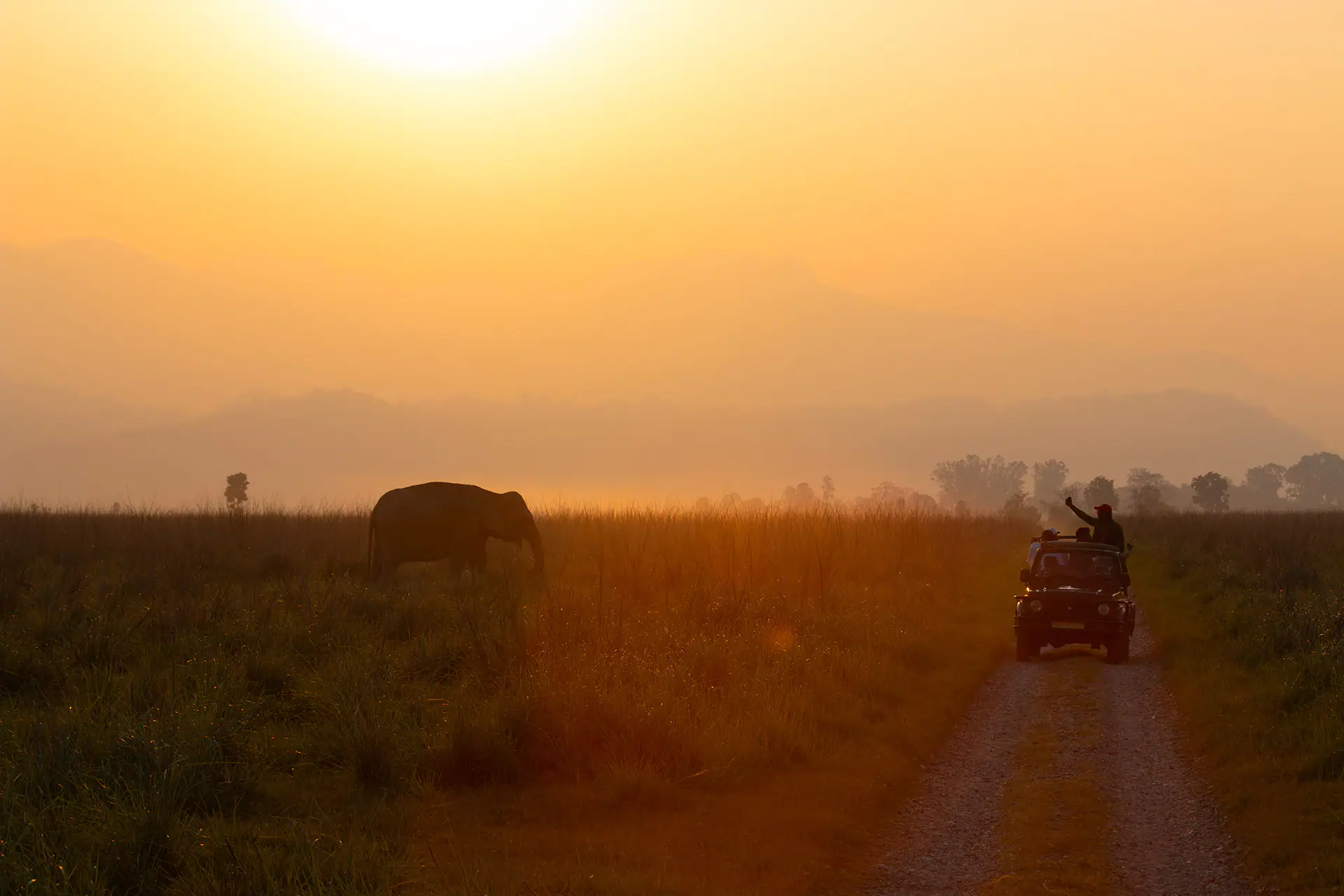
So Kaziranga vs Manas is not really a contest. It is a choice between two very different ideas of what a safari can be. Kaziranga is the rhino capital of the world. Dense, dramatic, done at scale. Manas is the wild frontier. A UNESCO World Heritage Site that is also a tiger reserve, an elephant reserve and a biosphere reserve, with the blue hills of Bhutan on the horizon and a river you can raft.
This guide settles the Kaziranga vs Manas question the honest way. The two parks head to head. The 2026-27 season dates and prices as they stand today. How booking actually works. And which park deserves your days.
Kaziranga vs Manas at a Glance
| Kaziranga | Manas | |
|---|---|---|
| Famous for | Greater one-horned rhino, over 2,400, about two-thirds of the world’s population | Wilderness; golden langur, wild water buffalo, tigers |
| Designations | UNESCO World Heritage Site, Tiger Reserve | UNESCO World Heritage Site, Tiger Reserve, Elephant Reserve, Biosphere Reserve |
| 2025-26 visitors | 4,58,618 (record, +8.5%) | 63,723 (+20% over four years) |
| 2026-27 season | Jeep safaris from Oct 3; elephant safaris from Nov 1 | Open since Oct 2 |
| Safari types | Jeep + elephant (seat by seat) | Jeep + elephant + river rafting |
| Jeep price (Indian) | ~Rs 4,200-4,500 per jeep (up to 6) | ~Rs 4,500-5,500 per jeep (up to 5-6) |
| Elephant price (Indian) | ~Rs 1,600-1,950 per person | ~Rs 1,350-1,400 per person |
| Crowds | High in peak season | Low, sightings often all to yourself |
| Gateway | Guwahati (~220 km) or Jorhat (~100 km) | Guwahati, west via Barpeta Road |
The table tells the Kaziranga vs Manas story in a single look. Kaziranga wins on density and infrastructure. Manas wins on wildness and solitude.
Kaziranga: The Rhino Capital
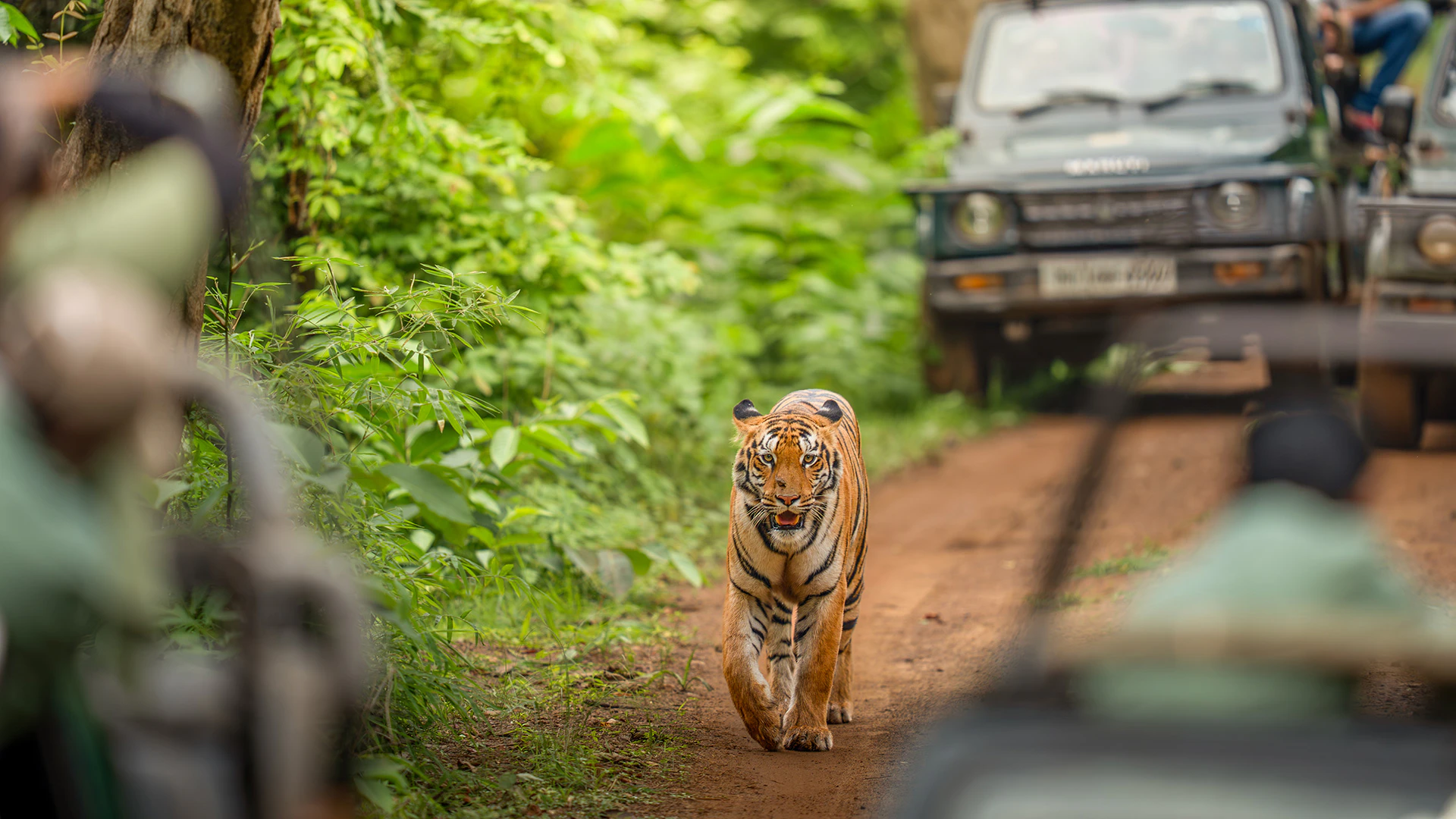
In the Kaziranga vs Manas debate, Kaziranga is the heavyweight. The numbers explain why. More than 2,400 greater one-horned rhinos live here. That is roughly two-thirds of every one left on Earth. The 2024 count put 148 adult tigers in the park, one of the highest densities anywhere. Add wild elephants, wild water buffalo, swamp deer and hundreds of bird species, and you get the most concentrated big-mammal spectacle in India.
Kaziranga runs four safari ranges. The Central (Kohora) and Western (Bagori) ranges opened for jeep safaris on October 3 and offer the best overall sightings. Most visitors do one safari in each. The Eastern (Agaratoli) range is the birders’ pick. Burapahar is the quiet corner most tourists never reach.
The headline event of the season is the elephant safari. It returns on November 1. It runs only in the early morning, in batches between about 5 and 7 am, at Kohora and Bagori. And it is the closest you will ever get to a rhino. Eye level, in tall grass no jeep can enter. For many visitors, this single experience settles the Kaziranga or Manas question on the spot. October, meanwhile, is jeep-only.
On prices. A jeep safari in Kohora or Bagori costs roughly Rs 4,200-4,500 per jeep (up to six people) for Indian nationals, and about Rs 9,000 for foreign nationals. The Eastern and Burapahar ranges run a little higher. Park entry is around Rs 115 for Indians and Rs 700 for foreign nationals, plus a camera fee. An elephant seat goes for roughly Rs 1,600-1,950 per person for Indians. Treat every figure as approximate and confirm on the booking portal before you pay. Tariffs get revised.
Manas: The Wild Frontier
The Manas side of the Kaziranga vs Manas story is quieter, wilder, and harder to leave. Where Kaziranga is a floodplain of tall grass, Manas is a mosaic. Forested Himalayan foothills, alluvial grasslands, tropical evergreen forest, with the Manas river running clean and blue along the Bhutan border. Four international designations protect it. World Heritage Site, tiger reserve, elephant reserve, biosphere reserve. Nowhere else in India stacks them quite like this.
The wildlife is the headline act with a different cast. The golden langur, found almost nowhere else, moves through the canopy in troops. Wild water buffalo, the largest wild cattle on Earth, wallow in the beels. Rhinos and elephants are here too, and tigers move through in genuine numbers. Then there is the river. Guided rafting runs on the Manas, a safari by water that Kaziranga simply cannot offer, with Bhutan’s hills filling the horizon.
Manas reopened for the 2026-27 season on October 2. Plan around its weekly closures for the 2026-27 season. As listed by a Manas-based operator, the Bansbari range shuts every Tuesday, Bhuyanpara every Thursday, Panbari every Friday, and the Kahitama beat every Monday. The main entry is Bansbari, where most lodges and safari operators cluster. Bhuyanpara is the secondary zone on the eastern side.
A jeep safari here costs roughly Rs 4,500-5,500 per jeep (up to five or six people) for Indian nationals in the Bansbari zone, with Bhuyanpara a touch higher. Entry runs about Rs 100-200 per person. Elephant safaris run in the early morning, around Rs 1,350-1,400 per person. As with Kaziranga, confirm current tariffs when you book. Third-party rates vary.
That is the heart of the Kaziranga vs Manas choice. Spectacle versus solitude.
Kaziranga vs Manas: Which Park Is for You?
Choose Kaziranga or Manas based on the traveller you are, not the photographs you have seen.
Pick Kaziranga if this is your first Assam safari, if the one-horned rhino is non-negotiable, or if you want the elephant-back experience from November 1. The infrastructure is the best in the Northeast. Lodges at every budget in Kohora, easy shared jeeps, and sightings so dense that even a single safari rarely disappoints. Photographers chasing rhinos at close range will not find better odds anywhere.
Pick Manas if you have done the famous parks and want the wild one, if solitude matters more than checklists, or if rafting a Himalayan river between safaris sounds like your idea of a perfect day. Birders should weigh it seriously too. Over 380 species are recorded here. And if you are the kind of traveller who remembers the empty jeep track more fondly than the sighting, Manas will stay with you longer.
Doing both? Many travellers visiting Kaziranga and Manas pair them in a single Assam circuit. Five to six days covers two safaris in each park with a travel day between. It is the best of both worlds, and the contrast is the point. You will understand each park better for having seen the other. Few travellers regret pairing the two parks.

Why November 1 Matters for Kaziranga vs Manas
There is a date that changes the Kaziranga vs Manas maths. November 1. That is when Kaziranga’s elephant safaris resume after the monsoon closure, and for many travellers it is the single best reason to pick early November. An elephant-back safari at dawn in the Central or Western range is the closest, quietest wildlife encounter in Indian tourism. Rhinos at eye level, in grass no jeep can enter.
If you are choosing between Kaziranga and Manas for an early-November trip, weigh this. Kaziranga gives you the returning elephant safaris. Manas gives you the full park already open since October 2, with thinner crowds. Either way, book the elephant seats the moment your dates are fixed. They are sold seat by seat, and the first week of November goes first.
Planning Your Kaziranga vs Manas Trip
For the Kaziranga vs Manas traveller, the practicalities decide as much as the wildlife.
Booking Kaziranga. Safari permits are booked through Assam’s official Sewa Setu portal. Search for “Online Safari Booking for Kaziranga National Park”, register with your mobile number, and pick your zone and slot. You can also book through your lodge or a registered operator. One warning worth heeding. The park has seen rackets selling fake safari permits through lookalike websites, so use the official portal or a known operator, and be suspicious of anything that looks unofficial. In peak season (November to March), permits can sell out two to four weeks ahead.
Booking Manas. Book through the park’s official online portal or your lodge. Third-party markups here can be steep, so the official channel or a reputable local operator is the safer route.
When to go. November to April is the window for both parks. November 1 is the date to circle. Elephant safaris resume at Kaziranga and the full season machinery is running. December to February brings the most pleasant weather. March and April dry the grasses out and sharpen sightings.
How many days. Two to three days per park is the sweet spot. Two safaris in different ranges, with a buffer for weather or a missed morning. A combined Kaziranga and Manas circuit wants five to six days.
Getting there. Guwahati is the gateway for both parks. Kaziranga’s Kohora gate is roughly 220 km east, four to five hours by road. Jorhat airport, about 100 km away, is the shorter hop. Manas’s Bansbari gate lies west toward the Bhutan border, via Barpeta Road.
A note on Pobitora. Assam’s third rhino park, a compact grassland with the highest rhino density of all, reopened on October 13. An easy day trip from Guwahati if you are combining parks.
If you are still weighing a tiger-focused trip more broadly, our complete guide to tiger safari costs in India will help you budget the whole journey, and our ranking of India’s ten best tiger safari parks puts both Assam parks in a national context.
Kaziranga vs Manas: Your Questions, Answered
In the Kaziranga vs Manas debate, which is better for tigers?
Both are tiger reserves, and Kaziranga’s density is among the highest recorded anywhere. But in a Kaziranga vs Manas tiger comparison, honesty matters. Kaziranga’s tall elephant grass makes tigers genuinely hard to see, while Manas’s mosaic of forest and grassland can offer cleaner, if rarer, encounters. Come to either park for rhinos, elephants and wilderness. Treat a tiger as the bonus it is.
Kaziranga vs Manas: which is cheaper?
On a Kaziranga vs Manas budget, Manas edges it. A jeep safari runs roughly Rs 4,500-5,500 per jeep against Kaziranga’s Rs 4,200-4,500. Similar on paper. But Manas’s lodges, entry fees and elephant seats all trend lower, and you will rarely feel pressured into premium add-ons. Kaziranga’s peak-season demand pushes accommodation prices up instead.
Can I do Kaziranga and Manas in one trip?
Yes, and you should if you have the days. Five to six days covers two safaris in each park with travel between them. Guwahati anchors both ends, so the logistics are simpler than the map suggests.
When do Kaziranga’s elephant safaris start in 2026?
November 1, at the Kohora and Bagori ranges, in early-morning batches. October is jeep-only, so time your trip accordingly if the elephant ride is the point.
Is one day enough for either park?
One safari gives you a taste, but both parks reward a second morning. Ranges differ enormously. Kohora and Bagori are different parks in miniature, and wildlife keeps its own schedule.
The Last Word
The Kaziranga vs Manas answer, in the end, is personal. Kaziranga is the essential Assam safari. The rhinos, the scale, the spectacle, the ease. Manas is the connoisseur’s Assam safari. The solitude, the river, the frontier feeling of the Bhutan hills at dawn.
Whichever you choose, go in season, book through official channels, and give the park more than a day. If you are planning a Kaziranga vs Manas journey and want it shaped around your dates, talk to us. Designing Assam circuits is what we do.